Request Expo / Tradeshow Checklist
You've invested money in having a booth ... sign up to get the 3 part series on tips for Expos and Tradeshows

Saturday, December 19, 2015

Wednesday, December 16, 2015
Stay Charged - December 2015 Newsletter
|
"Don't worry about failures, worry about the chances you
miss when you don't even try."-Jack Canfield
In this month's newsletter: Staying in front of your customers
in a tech world will only give you a greater name for your brand! Check out
our flyer for our December product of the month that will charge your devices
quicker without tangling multiple cords! And, learn 12 clever ways to
use more visuals on social media.
|
|
Looking for a multi cord charging device? EmbroidMe will light
your way with this handy device!
Charging up to three devices has never been easier all the
while promoting your brand with an illuminated logo!
EmbroidMe is your marketing partner and this month we want to
spotlight a tech item that everyone can use! This is MFi certified("Made
for iPhone/iPod/iPad") and comes with a matching travel bag.
Promote your name with a functional promotional item that will be used every
day!
We have a few of these in the store that you can have ... if you ask for one before they are all gone.
|
|
|

|
12 Clever Ways to Use More Visuals on Social Media
By Guy Kawasaki and Peg Fitzpatrick
|
|
If there is one thing you should try to do to increase the
impact of your social media, it's adding visual marketing to your posts. At
the simplest level, that means that every post should contain a graphic or
video. While that sounds like a lot of work, it can have a huge payoff -- this
tactic has helped us double the impact of our posts.
For most marketers just getting started with visual
content creation, putting visuals in every single post feels near impossible.
That's where this post comes in -- the purpose of this article is to explain
the best (and often easiest) tips for adding visuals to your social media
posts.
|

|


Tuesday, December 15, 2015
Snag Resistant or Snag Proof
Snagged fabric isn’t a look anyone can make work. No one wants their
clothing riddled with tiny holes and loose threads, after all; it looks unkempt
and unprofessional, a bad look for any occasion. Luckily, there are many
products on the market today that help prevent clothes from coming undone in
such an unsightly way. Sports gear, women’s nylons, and polo shirts are some of
the clothing that has become snag proof in recent years, and with good reason;
activewear and thinner fabrics are the most likely clothing items to become
easily damaged, so they need a little extra protection.
What makes a snag-proof fabric
snag-proof? First, it’s best to understand what exactly causes clothing to
become snagged. A snag happens when something—usually a sharp object of some
sort—is able to pull a thread or group of threads away from its place in the
fabric pattern, breaking the thread in the process. This leaves behind a small
hole, usually with the offending thread still attached; get enough snags in the
right material, and the whole thing could potentially unravel. Even one or two
little snags could become bigger holes if left without mending, destroying an
otherwise perfectly good piece of clothing.
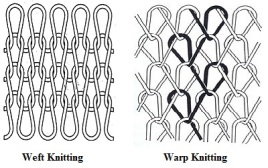
Snag proof fabrics seek to remedy these issues by being made of durable, tightly-woven threads. Sometimes, snag proof fabrics are woven in a warp knit; these fabrics’ fibers are woven at a more diagonal angle than the straight-across weft weave that other fabrics utilize, creating a tighter weave pattern that’s less prone to snags.
|
Snag-proof fabrics tend to be made of polyester, a
strong and long-lasting fiber made of different synthetic compounds. Clothing
made of polyester is generally strong enough to stand up to more repeated wear
and tear than other, more natural fibers, while staying just as or even more
comfortable. Polyester fibers, being strong, are difficult to break under
regular use. Polyester fabric, being
tightly woven yet slightly elastic, is difficult to put holes in; coupled with
the strong polyester fibers, this makes snagging the fabric tough to
impossible. For sportswear, which often gets a more rough-and-tumble treatment
than everyday clothing, this tougher fabric is a much better alternative than
others available. Nylons and other women’s legwear also benefits from a fabric
that won’t tear or snag easily, lasting longer and requiring fewer replacements
to be bought.
Even if you don’t play sports or wear
nylons, snag-proof polos are quickly becoming a popular choice for everyday or
business-casual clothing. After all, even the most usual actions can cause an
accidental snag here and there, and a snagged shirt is an annoyance no matter
where you are and what you’re doing. Many companies are quickly adopting these
new snag-proof shirts. One of our vendors, for example, carries a variety of
their own snag-proof polos in a special tricot weave, which must undergo vigorous
snag-testing to make sure it’s ready to ship out.
Snag proof fabric must be tested for
resistance in a special “beanbag” machine that rolls a fabric sample in the
hook-and-needle lined cylinder for one hundred revolutions. This should leave
the fabric with minimal snags, if any. Tested fabric is rated on a standard scale
of 1-5; 1 is the lowest grade possible with the most snags, while 5 is the
highest and has minimal to zero snags after testing. Typically, any fabric with
a rating between 1 and 3 is unacceptable to be shipped out, as it will snag too
easily to be called snag resistant; 3-4 is a standard rating, and denotes an
acceptable fabric; 4-4.5 is excellent, and 4.5-5 is an optimal fabric that is
just about as snag resistant as it could be. Pique knits and jerseys must test
at a 3.5 to a 4 rating before they can be acceptable to ship, and tricot weaves
must be between 4.5 and 5. Typically, a pique knit shirt made of 100% cotton is
a solid 5 on the scale, making it an ideal choice when considering an apparel
purchase.
Polo or Button ... a few thoughts on both items
Interestingly enough, polo shirts
were originally designed for playing tennis; in fact, to this day, they are
sometimes referred to as “tennis shirts”. Before champion René Lacoste invented the shirt in 1926,
tennis fashion consisted of long-sleeved button-up shirts, flannel pants, and neck
ties. This attire made the game difficult to play, and was uncomfortable to
boot. Lacoste’s design improved the clothing greatly, changing not only the
style of the shirt, but the material as well. The short sleeves meant players
no longer had to roll up their sleeves to keep their arms mobile; the soft
pique-style collar was able to be turned up to prevent a sunburned neck; the
new “jersey knit” fabric was durable, and more breathable than the previous
dress-shirt fabric; and a "tennis tail", created when the back of the
shirt was longer than the front, could be placed into the back of the pants to
keep a dignified and tucked appearance while still moving freely. Later, polo
players—whose uniforms likewise consisted of uncomfortable, long-sleeved
shirts—gladly embraced the shirt as part of their own sport. By 1973, when
Ralph Lauren featured the shirts as part of his company’s “Polo,” collection,
the shirt had already become so associated with polo that tennis players—for
whom the shirt was originally designed—took to calling it a “polo shirt”.
At the turn of the 20th
century, the color of choice for dress shirts was white. They were meant to be
a simple part of a suit, nothing more. In the 1910’s, however, colored shirts
became increasingly popular, with vertical blue-and-white stripes quickly
becoming a favorite. As the decade changed, striped dress shirts stayed trendy,
with thicker stripes and more varied colors coming into favor; blue and green
stripes could stylishly exist together on one shirt, while another might
feature yellow and pink stripes, and so on. Before long, checks, plaids, and
dots also came into fashion. These stripes and patterns were almost always set
against a white background, again to compliment whatever suit a man might wear,
though solid-colored pastel dress shirts became acceptable near the end of the
1920s.
Short-sleeved dress shirts didn’t
really come onto the market until 1953; even then, clothing retailers feared
the shorter sleeves would be too reminiscent of sports shirts, and had to
educate their sales associates on how to properly sell the idea of a
short-sleeved dress shirt. Luckily, customers gladly took to the new style, as
they could now keep cooler in the workplace while still looking classy in a
suit jacket. From these short-sleeved dress shirts, the business-casual button-down
shirt as we know it today was created. These shirts could be buttoned up to the
neck, or left open at the top for a more casual look, and were almost always
worn tucked into the waistband. More casual, sporty looks came into style as
well, made of more comfortable fabrics and with two large pockets.
“In the 1910’s the striped shirt such
as blue and white vertical stripes were very popular in the summer months. The
trend for stripes continued into the 1920’s where various thickness of stripes
were mixed with not just one color but multiple colors of stripes. Blue, green
and yellow could be seen on one shirt or pink, yellow and green on another. For
dress shirts the stripes were nearly always against a white background so as to
complement whatever suit men chose to wear. Besides stripes, Chevoit checks,
light plaids, and even polka dots had their trendy moments. Solid color dress
shirts were acceptable towards the late 20’s.
Greens and blues were the favorites although pastel colors like peach,
pink, purple, and orange were seen on trendy dressers…Fabrics were mostly
cottons or linen in summer. Silk was very popular in the 1910’s until the cost
of silk import drove the prices too high for the common man in 1920. Thicker,
corser weaves such as broadcloth were favored in the early years with the
softer oxfords and mercerized cotton leading the later years. Soft material
that was primarily used for men’s underwear and night shirts became a welcome
fabric in men’s dress and casual shirts too…While most men wore dress shirts
for 90% of their life, the working class, the young men, and the weekend
sportsmen wore casual shirts which were long sleeved and collared just like
dress shirts. The sport shirt was usually a single color, in a heavier durable
fabric such as twill, wool, or flannel for manual work and rugged sports
(hunting, hiking, fishing, etc)... The short sleeve shirt was just starting to
make an appearance in mens sportswear. The
polo shirt, a short sleeve knit shirt with longer shirt flaps in the back and
three buttons up to the collar was about as casual as you could get. The
polo shirt was new to market and not yet ready for the masses to bare arms.”
“The difference between dress and
sport was still in the tailoring and the fancy collar types. When the short
sleeve dress shirt hit the market around 1953, retailers, feared they would
look too much like sport shirts. Educating the salesmen to show off the new
style as a cooler alternative to long sleeves was required. Fortunately most
male shoppers picked up the trendy short sleeved style with enthusiasm. Now
they could relax in their offices in casual comfort and still look respectable
when the need came to put their suit jackets back on …The button down shirt was
a spin off from men’s dress shirts. They always had one or two chest pockets,
were worn tucked in and had a moderate point collar. Most shirt collars
buttoned up to the neck just like dress shirts. Some styles were made “sporty”
with double large pockets and more casual materials. In fall and winter a long
sleeve plaid flannel shirt (aka a country or California ranch look) was
especially popular.”
Monday, December 14, 2015
TECHNIQUE: Embroidery
· Modern days, most machines
computer operated
Free motion embroidery
Uses machines, but user moves fabric and
lowers “feed dogs” by hand.
Closest to at-home embroidery
you’ll get in a commercial setting.
Uses mostly zigzag and straight
stitching.
Only uses one needle at a time, so
colors must be switched out manually.
Bad for multiple identical
embroidered products, as the needed conformity of a computer can’t be
reproduced easily by human hands.
Computerized embroidery
We have this here
Need to decide and load what
colors will be needed BEFORE embroidery starts
Can make many different effects,
e.g. shimmers, glitter, chain stitches etc.
Image files must be made or
imported in embroidery-specific software
We want you to start with vector art of high-res jpeg to create the embroidery file. You can think of an embroidery machine as basically a simpler form of a CAD-Machine. A "program" has to be created to tell the machine which needles to use in which order to create the design. The program used to be called a tape from back in the days when computers were run by cards and tape. To create the program, a person or another program has to create a new program telling the machine which needle to use and where to go. This is what is called setup. While programs assist with this, some human interaction is needed to create the best design.
“You can machine-embroider any fabric, including silks and soft wools.
But producing exquisite embroidery that is well suited to the fabric, doesn't
pucker, or change the fabric's drape, involves the interaction of all the
following elements: a machine that's well-tuned and set at the appropriate
needle and bobbin tensions, a well-prepared and positioned design, the correct
needle and thread for the job, and a good understanding of the fabric you're
embroidering so that it's properly hooped and stabilized. I'll examine these
essentials, but I want to concentrate on how to choose designs and fabrics that
are compatible with each other and tell you what to do when they're not.”
Sourced @ http://www.threadsmagazine.com/item/4411/machine-embroidery-a-marriage-of-fabric-and-design#ixzz3qdvz5OuU
Saturday, November 7, 2015
Everyone Needs a Stylus
"If you don't go after what you want, you'll never have it. If you don't ask, the answer is always no. If you don't step forward, you're always in the same place."- Nora Roberts
In this month's newsletter: Why taking notes by hand is still the best way to retain information. Check out our flyer for an example of a notebook and matching stylus. Make it a package by adding a custom gift box! And, the top things you can learn from recent Instagram posts.
|

The Best Way To Remember Something? Take Notes By Hand
People who write notes by hand remember the content of meetings and lectures better than those who use laptops, new research shows.
Headed into an important meeting? Grab a pen. Taking notes longhand will help you remember information better than typing them out, according to new research from a pair of psychologists from Princeton University and UCLA.
|
| |
5 Lessons Learned Analyzing My Most Popular Instagram Updates.
By Tomothy Skyes
|

AUGUST 19, 2015 Recently, I was honored to be featured by my fellow Entrepreneur contributor, Thomas Smale, on his list of "8 Inspiring Instagram Accounts You Should Follow." Being recognized on this list meant a lot to me, because everything I do on Instagram (and in the rest of my life) is dedicated to one thing: inspiring my students to succeed.
But being called out as having an "extremely popular Instagram account" got me thinking. What is it that's made my account so successful so far? To get some answers, I decided to run a free Instagram activity report from Simply Measured to determine which of my posts have received the most engagement so far and why.
|
|
Tuesday, November 3, 2015
What's cooler? Polyester or Cotton?
What’s cooler, polyester or cotton
fabric?
It depends!
Part of the opinion on what is cooler has to do with what
you grew up with; Baby Boomers and the older members of Generation X tend to
feel cooler and more comfortable in cotton garments due to their experiences
growing up with it. These folks believe, as the saying goes, “cotton is the
fabric of your life”.
Millennials, on the other hand, grew
up with moisture-wicking fabrics and companies such as Under Armour. This
generally makes them feel more comfortable in the fabric of their lives, polyester.
We’ve experienced this anecdotally
with our customers’ experiences as well when we asked them their preferences for fabric, it is very much driven by generational markets. So, when suggesting items we ask: to what generation
do most of your employees belong? Issues with workplace clothing can often
arise when the staff is cross-generational, and thus disagree on which fabric
is most comfortable. Based on the situation, we recommend employers select shirts of both types of fabric, and allow their employees to choose between
them.
What's the science?
What's the science?

COTTON
PROS
·
Cotton, having natural fibers, absorbs sweat
much easier than polyester
·
It’s generally a softer, more breathable fabric
CONS
·
It tends to hold on to the sweat it does absorb;
without evaporation to take the liquid away from your skin, the trapped sweat
makes you feel hotter for longer
·
Cotton may feel softer, but it isn’t as durable
as some other fabrics under repeated uses and washings
POLYESTER
PROS
·
It wicks away moisture more quickly than cotton
·
It’s a long-lasting fabric, holding up well to
use and washings
CONS
·
Polyester tends not to absorb as much liquid as
cotton; while it wicks away the liquid it does absorb quickly, the remaining
sweat stays trapped against the skin, keeping you warm and uncomfortable
·
Generally speaking, polyester isn’t as
“breathable” as cotton…unless the fabric is skin-tight, and not many people can
pull off that look
Whether
you’re working out or just trying to keep cool on a hot day, it’s important to
know what to wear to keep yourself from getting too hot. Of course, when it
comes to fabrics, this raises an important question: which fabric will keep you
the coolest? There are other fabrics out there, but traditionally the two most
popular choices are either cotton or polyester. All in all, it comes down to
opinion; do you prefer a faster wicking fabric, or a more absorbent one? A more
breathable cotton shirt, or a more durable polyester one? Did you grow up with
cotton, or polyester? A number of factors play into which fabric will make you feel
cooler, so remember to consider what you’ll need it for before you make a
choice.
Of
course, if you have an allergy to either cotton or polyester, it’s a bit of a
moot point.
[Information
sources: http://www.washingtonpost.com/wpdyn/content/article/2010/08/09/AR2010080904129.html
Subscribe to:
Posts (Atom)